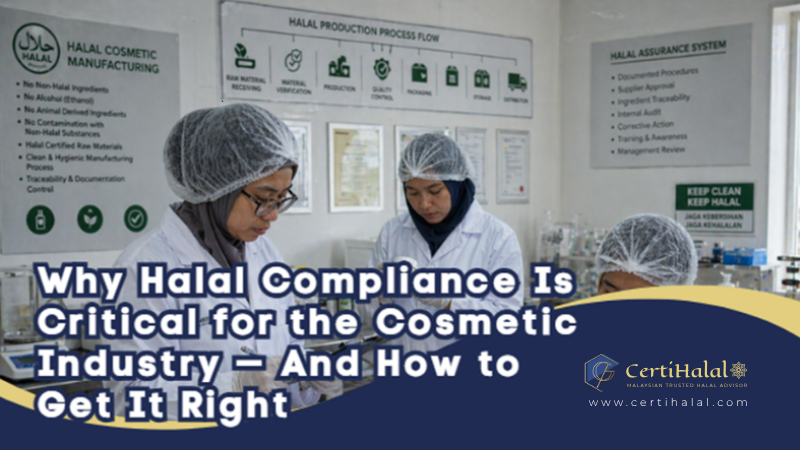
Why Halal Compliance Is Critical for the Cosmetic Industry — And How to Get It Right
Published on 30 April 2026Table of Contents
Introduction
The global cosmetics industry is undergoing a significant shift. Consumers are no longer focused solely on product performance; they are increasingly concerned with ingredient transparency, ethical sourcing, and alignment with personal values. Within this landscape, halal compliance has emerged as a critical requirement, particularly in markets with strong Muslim consumer bases.
For cosmetic manufacturers, halal is no longer a niche consideration. It is a strategic factor that influences product acceptance, market access, and brand credibility. However, achieving halal compliance is not a straightforward process. It involves navigating complex ingredient structures, supply chain challenges, and regulatory expectations.
Businesses that approach halal compliance with a structured strategy can unlock new opportunities—those who do not risk falling behind in an increasingly competitive market.
Growing Demand for Halal Cosmetics
A combination of demographic, cultural, and lifestyle factors drives the demand for halal cosmetics.
Expanding Consumer Base
Muslim consumers represent a significant and growing segment of the global market. Their purchasing decisions are influenced not only by quality and price but also by compliance with religious principles rooted in Islam. This creates a consistent demand for products that meet halal standards.
Alignment with Ethical and Clean Beauty
Halal cosmetics are often associated with broader values such as safety, cleanliness, and ethical production. This has increased their appeal among non-Muslim consumers who prioritise transparency and responsible sourcing.
Market Expansion Opportunities
Regions such as Southeast Asia, the Middle East, and parts of Africa present strong growth potential for halal-certified cosmetic products. Companies that align with halal requirements are better positioned to enter and scale within these markets.
Why Cosmetic Products Require Halal Compliance
Unlike some industries, cosmetics involve complex formulations that make halal compliance particularly challenging.
Ingredient Complexity
Cosmetic products often contain a wide range of ingredients, including emulsifiers, preservatives, fragrances, and stabilisers. Many of these components may be derived from animal sources or involve chemical processes that raise compliance concerns.
Risk of Non-Halal Substances
Certain substances, such as alcohol and animal-derived ingredients, require careful evaluation. Even when used in small quantities, their presence can affect a product’s halal status.
Beyond Ingredients: Process Matters
Halal compliance is not limited to ingredient selection. It extends to:
- Manufacturing processes
- Equipment usage
- Storage and handling practices
Any point of contamination can compromise the product’s integrity.
Building Consumer Trust
Consumers rely on halal certification as a signal of trust. Without it, brands may struggle to gain acceptance, regardless of product quality.
Challenges Faced by Cosmetic Manufacturers
Despite recognising the importance of halal compliance, many manufacturers face significant barriers to achieving it.
Difficulty in Verifying Ingredient Sources
Global supply chains often involve multiple suppliers and intermediaries. This makes it difficult to trace the origin of each ingredient and verify its compliance.
Limited Transparency
In some cases, suppliers may not provide complete or consistent documentation. This creates uncertainty and increases the risk of non-compliance.
Misinterpretation of Requirements
A common misconception is that avoiding certain ingredients is sufficient. In reality, compliance requires a holistic approach that includes process control and documentation.
Lack of Internal Expertise
Many companies do not have dedicated teams or systems to manage halal compliance. As a result, they rely on ad hoc processes that are prone to errors.
Regulatory and Certification Expectations
Meeting halal standards requires alignment with recognised regulatory frameworks.
In Malaysia, the Department of Islamic Development Malaysia oversees halal certification and ensures that products comply with established guidelines. The process includes documentation review, facility inspection, and verification of production systems.
For companies targeting Indonesia, compliance must align with requirements set by the Halal Product Assurance Organizing Agency. This authority enforces national regulations and plays a key role in determining eligibility for market entry.
Across jurisdictions, several expectations remain consistent:
- Full traceability of ingredients
- Clear and complete documentation
- Controlled manufacturing processes
- Ongoing compliance and monitoring
These requirements highlight the need for a structured and systematic approach.
Operational Risks Without Halal Compliance
Failing to address halal requirements can have significant consequences.
Market Access Limitations
Without proper certification, products may not be allowed in certain markets or face distribution restrictions.
Loss of Consumer Trust
Consumers are increasingly discerning. Brands that cannot demonstrate compliance risk losing credibility and long-term loyalty.
Delays in Product Launch
Certification issues can delay product launches, affecting timelines and revenue projections.
Financial Impact
Reworking formulations, sourcing new ingredients, and repeating audits can significantly increase costs. These expenses are often avoidable with proper preparation.
Why Cosmetic Businesses Need Halal Advisory Support
Given the complexity of halal compliance, many businesses benefit from external expertise.
Bridging the Knowledge Gap
Regulatory requirements are detailed and technical. Advisory support helps translate these requirements into practical operational steps.
Structuring Internal Systems
Implementing a Halal Assurance System (HAS) ensures that compliance is integrated into daily operations. This reduces reliance on reactive problem-solving.
Managing High-Risk Ingredients
Certain ingredients require specialised evaluation. Expert guidance helps identify risks early and determine appropriate alternatives or controls.
Ensuring Audit Readiness
Preparation is key to successful certification. Advisory support helps businesses organise documentation, align processes, and address potential gaps before audits.
How a Structured Halal Compliance Approach Works
Achieving and maintaining halal compliance requires a systematic approach.
Ingredient Risk Assessment
Businesses should classify ingredients based on their risk level. High-risk components require deeper verification and stricter control measures.
Supplier Verification Framework
A structured process for evaluating and approving suppliers ensures consistency and reduces uncertainty. This includes:
- Reviewing supplier certifications
- Establishing documentation requirements
- Conducting periodic audits
Process Control and Contamination Prevention
Manufacturing processes must be designed to prevent contamination. This involves:
- Dedicated or properly cleaned equipment
- Clear segregation procedures
- Controlled production environments
Continuous Monitoring
Compliance must be maintained over time. Regular reviews and updates ensure that standards remain consistent, even as products and processes evolve.
Conclusion
Halal compliance is no longer a secondary consideration for the cosmetic industry. It is a strategic requirement that influences market access, consumer trust, and long-term growth.
The challenges associated with halal certification are real, but they are not insurmountable. Businesses that adopt a structured, system-driven approach can overcome these barriers and position themselves for success.
Ultimately, halal compliance is about more than meeting requirements. It is about building a foundation of trust, transparency, and operational excellence. Companies that recognise this will not only achieve certification but also strengthen their position in an evolving global market.
FAQ
1. Is halal certification necessary for cosmetic products?
In many markets, halal certification is essential for building consumer trust and meeting regulatory requirements.
2. What makes a cosmetic product non-compliant with halal standards?
Non-compliance can result from the presence of prohibited ingredients, unclear sourcing, contamination risks, or incomplete documentation.
3. Why is halal compliance more complex for cosmetics than other industries?
Cosmetics involve complex formulations and multi-layered supply chains, making ingredient verification and process control more challenging.
4. Are ingredient checks enough to ensure halal compliance?
No. Compliance also requires proper manufacturing processes, contamination control, traceability, and supporting documentation.
5. What are the biggest risks in halal cosmetic production?
Key risks include animal-derived ingredients, alcohol usage, supplier transparency issues, and cross-contamination during manufacturing.
6. Why do cosmetic companies struggle with halal certification?
Common challenges include a lack of internal expertise, difficulty verifying ingredient sources, and insufficient compliance systems.
7. How does halal certification impact market access?
Without certification, products may face restrictions in halal-sensitive markets, limiting distribution and growth opportunities.
8. What is a Halal Assurance System (HAS) in cosmetics?
It is a structured internal system that ensures halal compliance is consistently maintained across sourcing, production, and documentation.
9. Can existing cosmetic products be converted to halal-compliant?
Yes, but it may require reformulation, supplier changes, process adjustments, and full compliance verification.
10. How can businesses prepare for halal certification in the cosmetic industry?
They should implement internal compliance systems, verify all ingredients, establish supplier controls, and ensure that documentation is audit-ready.
Disclaimer:
This content is for informational purposes only and does not constitute legal or regulatory advice. Halal certification decisions are subject to the requirements and approval of Jabatan Kemajuan Islam Malaysia and relevant authorities.