Why Malaysia’s Next Halal Challenge Is Business Readiness, Not Consumer Demand
Published on 04 August 2026Table of Contents
Malaysia’s halal sector is not being held back by a lack of consumer awareness. Muslim consumers already recognise the importance of halal assurance, while retailers, distributors, institutional buyers and export partners increasingly expect businesses to provide reliable evidence of compliance.
The more difficult question is whether enough businesses are operationally prepared to meet that demand.
A company may have suitable products and genuine market interest, yet still be unable to satisfy a buyer’s halal requirements. Ingredient documents may be incomplete, suppliers may not have been properly verified, responsibilities may be unclear, and production records may not show that halal controls are consistently applied.
This is the halal readiness gap: the distance between a market opportunity and a company’s ability to support that opportunity with verifiable people, processes, controls and records.
Malaysia’s next phase of halal growth may therefore depend less on creating demand and more on increasing the number of businesses capable of responding to that demand with confidence.
Halal Business Readiness Is More Than an Application
Halal business readiness is the ability of a company to demonstrate that its people, suppliers, materials, procedures and records are aligned with the halal requirements applicable to its operation.
This readiness must exist before certification can be meaningfully pursued. An application does not create a compliant operation. It presents the business and its supporting evidence for assessment by the relevant halal authority.
Business owners should therefore distinguish between three stages:
- Interest in halal certification — the business sees commercial or consumer value.
- Halal readiness — the required internal controls have been established and implemented.
- Certification assessment — the competent authority evaluates the application, documents and actual operation.
This distinction matters because a product that appears suitable for Muslim consumers is not automatically supported by a complete halal management system. Halal extends beyond the absence of pork or alcohol. It includes sourcing, receiving, storage, processing, cleaning, equipment, packaging, transport, traceability and responsibility throughout the organisation.
The Readiness Gap Has Four Main Dimensions
For most businesses, the gap does not arise from one missing form. It usually develops across four connected areas.
People
The company may not have assigned clear responsibility for halal matters. Employees may not know who approves ingredients, checks deliveries, updates supplier certificates or responds to a non-conformity.
Suppliers and materials
The business may use ingredients or processing aids without complete information about their source, manufacturer, processing method or halal status.
Processes
Written procedures may not reflect what employees actually do. Storage, production, cleaning or transportation practices may differ between shifts, premises or branches.
Evidence
The company may follow acceptable practices but fail to maintain sufficient records to demonstrate them. In certification and audit settings, undocumented activity can be difficult to verify.
This creates a predictable sequence:
Market demand leads to a buyer requirement. The buyer requirement exposes an internal capability gap. The capability gap delays certification or supplier approval. The delay can then become a lost commercial opportunity.
Malaysia’s Halal Framework Places Responsibility on the Business
Malaysia’s halal certification system involves authoritative bodies such as the Department of Islamic Development Malaysia, state Islamic religious departments and state Islamic religious councils, depending on the applicable jurisdiction and certification arrangement.
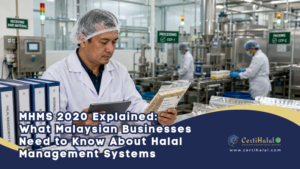
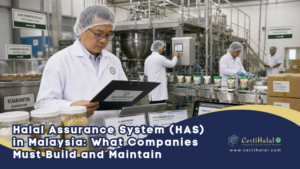
The Malaysian Halal Management System 2020 provides an important framework for internal halal management. It states that the company or applicant is responsible for ensuring that Malaysian halal certification requirements are observed continuously.
MHMS 2020 broadly distinguishes between:
- the Halal Assurance System, generally applicable to medium and large industries; and
- the Internal Halal Control System, generally applicable to eligible small and micro industries.
However, business size is not the only consideration. The applicable requirements also depend on the certification scheme and the nature of the operation.
Depending on the business, relevant references may include the Manual Procedure for Malaysia Halal Certification, Malaysian Standards such as MS 1500, applicable fatwas, the Trade Descriptions framework and sector-specific regulatory requirements.
The practical lesson for business owners is simple: halal preparation cannot be copied blindly from another company. The internal system must fit the business’s actual products, premises, workforce, supply chain and certification scope.
Raw Materials Often Reveal Whether a Business Is Truly Ready
Many halal-readiness problems begin with ingredients and suppliers.
A business may know the name of an ingredient but not its actual manufacturer. A distributor may provide a specification sheet without sufficient information about the source. A halal certificate may have expired or may not clearly cover the material being purchased.
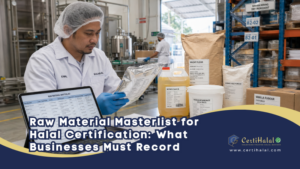
Applicable businesses may need a Raw Material Masterlist that records information such as the material name, source, manufacturer, halal certification details, expiry date and supporting documentation. MHMS 2020 also requires written controls for purchasing, receiving and storing materials under the relevant system.
A reliable material-control process should help the company answer:
- Who manufactures this material?
- What is its biological, animal, plant or chemical source?
- Does the halal certificate apply to the exact material and facility?
- When will the supporting document expire?
- Has the supplier, formula or manufacturing location changed?
- Who has the authority to approve a replacement material?
High-risk ingredients require even closer review. Gelatin, for example, cannot be assessed by name alone. Its origin, animal source, processing, handling and supporting records all affect its halal status.
Cosmetic businesses may face similar difficulties with fragrances, emulsifiers, colourants, alcohol-related materials and animal-derived components.
Halal Controls Must Follow the Actual Operation
Halal compliance should be built around how the business works each day.
The company should first map the movement of materials and products through purchasing, receiving, storage, preparation, processing, packaging, finished-goods storage and distribution. It can then identify where halal risks may arise.
A Halal Control Point is a stage where a halal risk needs to be controlled. Depending on the operation, this may involve:
- ingredient approval;
- receiving checks;
- shared equipment;
- storage segregation;
- cleaning and product changeovers;
- packaging and labelling; or
- third-party logistics.
Where required, the halal risk-management plan should identify the risk, control method, monitoring frequency, responsible person, corrective action and supporting record. MHMS 2020 links Halal Control Point identification to process flows and floor plans, and requires risk controls to be developed specifically for halal matters.
Food-safety or quality systems can support good operational discipline, but they do not automatically replace halal-specific assessment. A process may be hygienic while still presenting an unresolved issue involving ingredient origin, contamination, shared equipment or transport.
Traceability Converts Practice Into Evidence
A halal-ready business should be able to trace materials backwards to their source and products forwards to their destination.
This requires connected records such as:
- purchase orders and invoices;
- delivery and receiving records;
- supplier certificates;
- production or formulation records;
- batch and stock records;
- packaging information; and
- distribution records.
Traceability enables the business to identify affected products when a material, supplier or production issue is discovered. For businesses subject to the relevant requirements, a product-withdrawal or recall procedure may also need to be established and tested.
Without traceability, the company may be unable to isolate a specific batch. A small supplier problem can then become a much larger operational and commercial risk.
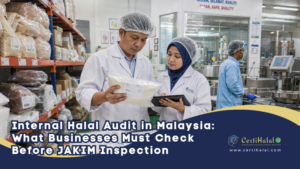
Internal Audits Test Whether the System Is Real
Documents alone do not prove readiness. The company must show that employees follow the documented controls.
An internal halal audit can compare:
- approved materials with materials actually in use;
- written procedures with site practices;
- training records with employee understanding;
- supplier documents with received goods;
- traceability procedures with actual batch records; and
- corrective actions with evidence of closure.
Under MHMS 2020, applicable businesses must establish internal halal audit procedures, record findings and take corrective action where non-conformities are identified.
Common problems include expired documents, ingredients used before approval, inconsistent branch practices, outdated procedures and incomplete records.
These are among the common causes of halal certification delays and non-compliance.
Is Your Business Ready to Proceed?
Before beginning an application, a business owner should be able to answer yes to most of the following:
- Can we identify every ingredient, processing aid and manufacturer?
- Are supplier and halal-supporting documents current?
- Do employees know who is responsible for halal decisions?
- Do our procedures match what happens on the premises?
- Can we trace a product batch back to its materials?
- Can we show operating records rather than newly prepared blank forms?
- Have staff received training relevant to their duties?
- Have we conducted an internal review or audit?
- Have identified gaps been corrected and verified?
Several “no” answers do not necessarily mean certification is impossible. They indicate that the company should strengthen its internal capability before treating the application as the next immediate step.
Professional halal guidance may help a business interpret requirements, assess gaps, review ingredients, develop procedures and prepare for assessment. However, an adviser cannot replace the competent authority or guarantee certification. The company remains responsible for implementation and continuous compliance.
Readiness Must Continue After Certification
Halal certification should not be treated as the end of the process.
Suppliers change. Certificates expire. Employees leave. New products are introduced. Equipment and layouts are modified. A business that does not review these changes can gradually move away from the system that supported its original approval.
Long-term readiness therefore requires continuous supplier monitoring, material review, staff training, internal auditing, corrective action and preparation for renewal.
The companies best positioned for Malaysia’s next phase of halal growth will not be those that begin reacting only after a buyer asks for proof. They will be those that have already built the people, supplier controls, operational discipline and records needed to respond confidently.
Frequently Asked Questions
1. What is halal business readiness?
Halal business readiness is the ability of a company to demonstrate that its materials, suppliers, employees, processes and records satisfy the halal requirements applicable to its operation. It exists before certification assessment begins.
2. Is halal readiness the same as halal certification?
No. Readiness is developed and maintained internally by the business. Certification is the formal outcome of an assessment and decision by the competent halal authority.
3. When should a business begin preparing?
Preparation should begin before certification becomes an urgent buyer, tender or export requirement. Supplier verification, training, documentation and operating records may take time to establish properly.
4. Is avoiding pork sufficient for halal certification?
No. Halal compliance may also cover ingredient sources, handling, equipment, processing, storage, contamination control, traceability and documentation. The exact requirements depend on the applicable scheme.
5. What is the difference between HAS and IHCS?
The Halal Assurance System is generally a more comprehensive system for medium and large industries. The Internal Halal Control System generally provides core controls for eligible small and micro industries, subject to the relevant certification scheme.
6. Does every business need a Halal Executive?
Not necessarily. The requirement depends on factors such as the certification scheme, company category and current procedures. Businesses should confirm what applies to their specific operation.
7. Why are supplier documents so important?
Supplier documents help establish the identity, source, manufacturer and halal status of materials. Without reliable evidence, even a seemingly acceptable ingredient may be difficult to verify.
8. What is a Halal Control Point?
It is an operational stage where a halal risk must be identified and controlled. Examples may include ingredient approval, shared equipment, storage, cleaning or transportation.
9. Can a halal consultant approve or guarantee certification?
No. A consultant may support assessment, documentation, training and implementation, but approval belongs to the relevant competent halal authority.
10. Does halal compliance end once certification is obtained?
No. The business must continue monitoring materials, suppliers, staff, procedures and records. Continuous compliance is also important for audit performance and certification renewal.
Disclaimer:
This content is for informational purposes only and does not constitute legal or regulatory advice. Halal certification decisions are subject to the requirements and approval of Jabatan Kemajuan Islam Malaysia and relevant authorities.