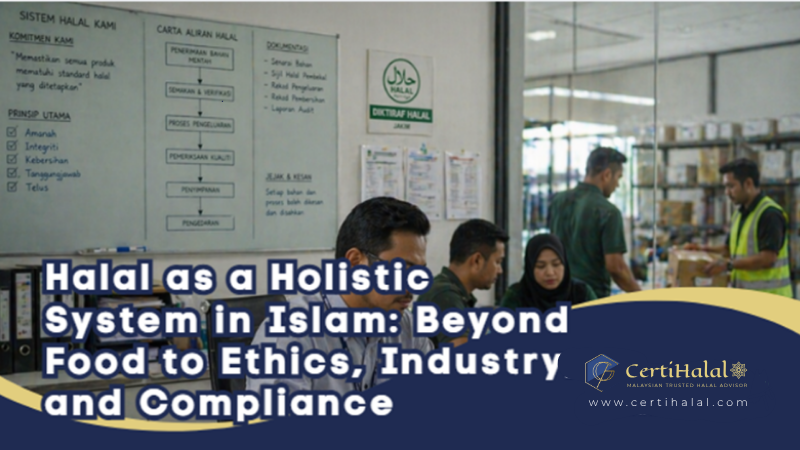
Halal as a Holistic System in Islam: Beyond Food to Ethics, Industry, and Compliance
Published on 30 April 2026Table of Contents
Introduction
The word “halal” is often associated with food — what can or cannot be consumed. While this is a common starting point, it only captures a small part of a much broader concept. In reality, halal represents a comprehensive system that shapes how individuals live, how products are made, and how businesses operate.
Understanding halal as a system is essential for both individuals and organisations. It moves the conversation beyond simple rules into a structured framework that includes ethics, responsibility, and compliance. This article explores halal from its foundational meaning to its modern application across industries and regulatory environments.
Understanding the Meaning of Halal
At its core, halal means “permissible” or “lawful” within the teachings of Islam. These guidelines are derived primarily from the Qur’an, which outlines what is allowed and what is forbidden.
Halal is often understood in contrast to “haram,” which refers to what is prohibited. However, the distinction is not just about restriction. It reflects a structured approach to living — one that prioritises safety, cleanliness, and ethical behaviour.
A key principle in halal is that everything is considered permissible unless there is clear evidence to the contrary. This principle provides flexibility while maintaining clear boundaries where necessary.
Halal Beyond Food: A Way of Life
Although food is the most visible aspect of halal, its scope extends far beyond dietary practices—halal influences daily decisions, behaviour, and interactions.
Lifestyle and Behaviour
Halal applies to how individuals conduct themselves, including honesty in transactions, respect for others, and responsible decision-making. It encourages a balanced lifestyle grounded in ethical values.
Ethical Consumption
Consumers are encouraged to consider not only what they consume but also how products are produced. This includes examining sourcing practices, production methods, and the overall impact on health and society.
Cleanliness and Well-Being
Halal emphasises cleanliness and safety. Products and practices must meet standards that protect both physical and moral well-being. This focus on hygiene and care contributes to broader public health and quality standards.
Halal as an Ethical and Social System
Halal is deeply connected to ethical principles. It promotes fairness, accountability, and transparency in both personal and professional contexts.
Fairness and Responsibility
Businesses and individuals are expected to act responsibly, ensuring that their actions do not harm others. This includes fair treatment of workers, ethical sourcing of materials, and honest communication.
Social Impact
Halal encourages practices that benefit society as a whole. It aligns closely with ideas of sustainability, responsible consumption, and social justice.
Integrity and Intention
An important aspect of halal is intention. Compliance is not just about meeting technical requirements but also about maintaining integrity in actions and decisions.
Application of Halal in Modern Industries
In today’s world, halal extends into multiple industries, reflecting its role as a comprehensive system.
Food, Cosmetics, and Pharmaceuticals
Products in these sectors must meet halal requirements for ingredients, production processes, and handling. This ensures that they are safe, clean, and compliant.
Finance and Business
Halal principles also apply to financial practices, promoting fairness and avoiding exploitation. Ethical business conduct is a central component of halal compliance.
Supply Chain and Production
Halal is increasingly integrated into supply chain management. This includes traceability, quality control, and process verification to ensure compliance at every stage.
Global Market Expansion
As awareness grows, halal standards are becoming more relevant in global trade. Businesses that align with these standards can access broader markets and meet diverse consumer expectations.
From Concept to System: Halal Compliance Framework
For organisations, halal must be translated from a concept into a structured system.
Process Integration
Halal requirements need to be embedded into daily operations, from sourcing to production and distribution. This ensures consistency and reduces the risk of non-compliance.
Traceability and Control
Businesses must be able to trace ingredients and materials throughout the supply chain. This level of transparency is essential for verification and audit purposes.
Documentation and Verification
Compliance relies heavily on documentation. Companies must maintain accurate records that demonstrate adherence to halal standards.
Halal Certification and Regulatory Framework
To formalise compliance, many organisations pursue halal certification.
Purpose of Certification
Certification assures that products meet halal standards. It builds consumer trust and supports market access.
Regulatory Authorities
In Malaysia, the Department of Islamic Development Malaysia oversees halal certification and ensures compliance with established guidelines. In Indonesia, the Halal Product Assurance Organizing Agency regulates halal certification as part of national requirements.
Key Elements of Certification
The certification process typically includes:
- Documentation review
- Ingredient verification
- Process inspection
- Audit and approval
These steps ensure that compliance is comprehensive and verifiable.
Common Misconceptions About Halal
Despite its importance, halal is often misunderstood.
“Halal Is Just About Food”
In reality, halal applies to many aspects of life and industry, not just dietary rules.
“No Pork Means Halal”
Avoiding specific ingredients is not enough. The entire process, including sourcing and handling, must comply with halal standards.
“Self-Declared Claims Are Sufficient”
Without proper verification, claims cannot replace formal certification or structured compliance systems.
“Halal and Ethical Are the Same”
While halal includes ethical principles, it is a defined system with specific requirements that go beyond general ethical practices.
Importance of Halal Systems in Business and Society
Implementing halal systems offers significant benefits.
Building Trust
Certification and compliance demonstrate commitment to quality and integrity, strengthening consumer confidence.
Ensuring Product Integrity
A structured approach ensures that products are safe, consistent, and aligned with established standards.
Enhancing Market Access
Halal compliance enables businesses to enter markets that require certified products, expanding growth opportunities.
Supporting Sustainable Practices
By promoting responsible sourcing and production, halal systems contribute to long-term sustainability.
Conclusion
Halal is far more than a set of dietary rules. It is a comprehensive system that integrates ethical values, operational practices, and regulatory compliance. From individual behaviour to global industries, halal provides a structured framework that promotes safety, integrity, and responsibility.
For businesses, understanding halal as a system is essential. It enables them to move beyond basic compliance and build processes that support long-term growth and trust. In an increasingly interconnected world, halal is not just a requirement — it is a strategic advantage for those who are prepared to implement it effectively.
FAQ
1. What does halal mean beyond food?
Halal refers to what is permissible in all aspects of life, including behaviour, business practices, and product usage.
2. How is halal applied in modern industries?
It is implemented through compliance systems that govern sourcing, production, handling, and distribution.
3. Why is halal certification important?
Certification assures compliance, builds trust, and enables access to regulated markets.
4. What is the difference between halal and haram?
Halal refers to what is allowed, while haram refers to what is prohibited under Islamic teachings.
5. Is halal only relevant for Muslims?
While rooted in Islamic principles, halal standards are often valued by non-Muslims for their emphasis on safety and ethics.
6. Can a product be partially halal?
No. A product must fully comply with halal requirements to be considered halal.
7. What is meant by traceability in halal systems?
Traceability refers to the ability to track ingredients and processes throughout the supply chain.
8. Are natural products always halal?
Not necessarily. Natural ingredients must still be evaluated for compliance with halal standards.
9. How do businesses maintain halal compliance over time?
Through continuous monitoring, documentation, and adherence to established procedures.
10. What role do regulatory authorities play in halal certification?
Authorities set standards, conduct audits, and ensure that products meet compliance requirements.
Disclaimer:
This content is for informational purposes only and does not constitute legal or regulatory advice. Halal certification decisions are subject to the requirements and approval of Jabatan Kemajuan Islam Malaysia and relevant authorities.